So long folks!
The Ottawa Comic Book Book Club is adjourned for the moment. We were supported by the Ottawa Silver Snail, who is unfortunately closing. The book club will return in a different format later this year and the book club report may very well come back at that time.
In the meantime, here are the archive:
Astonishing X-Men: Northstar: A discussion with Marjorie Liu
Everywhere Antennas: A discussion with Julie Delporte
Marvel Knight: Spider-Man: by Matt Kindt & Marco Rudy
It Never Happened Again, A discussion with by Sam Alden
Petty Theft: A discussion with Pascal Girard
Shortcomings, by Adrian Tomine
Dotter of her Father's Eyes, by Mary M. Talbot and Bryan Talbot
Sunday, 6 September 2015

Sunday, 30 August 2015
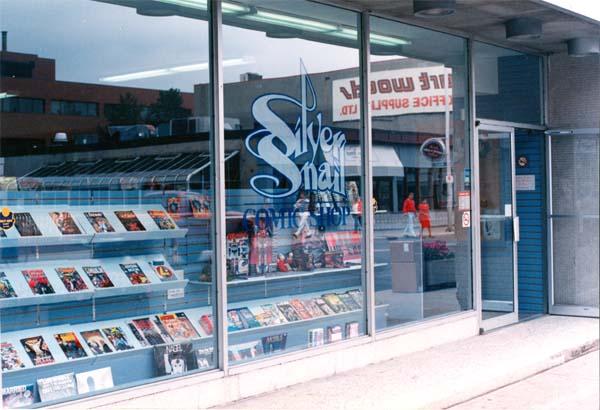
Farewell Silver Snail
 |
| Silver Snail: 1988-2015 |
On Monday August 4th, 2015 I received some bad news, the kind that really takes you aback. The manager of my favorite comic book shop sent out a notice of closure to their distribution list. I am extremely saddened to learn this news. The Ottawa Silver Snail was without a doubt the best comic book shop in town. I moved to Ottawa in 2008 and immediately adopted the Snail as my `go-to` comic book shop. It wasn't too difficult to make this choice; the shop was organized, the staff friendly, and the stock showed that the manager actually genuinely cared about comics as an art form. I have been across Canada for my work this past year and I`ve truly come to admire the way the Silver Snail kept the shop clean and organized. It may seem like a minor detail, but after visiting no less than 22 shops across the nation (and even some in the US), the Silver Snail in Ottawa was one of the best I've been to, rivaled only by The Beguiling in Toronto. No small feat, let me assure you.
The quirkiness of the place also gave it a peculiar charm. I remember being taken aback when I first noticed the wall of "Kin" behind the cash register. A ton of newspaper clippings taped to the wall with various headlines like “Next of kin” or “Sister loses kin in a car accident”. I asked the manager “What is all of this?” He replied simply “Kin, that’s my name” and cracked a smile. He was not above a good pun, which was excellent news for me since I`m a master of puns.
It was during one of my frequent visits that I met one of my best friends, Helen Anderson, the store’s assistant manager .And as she put her creative energies into starting a Comic book Book Club, I started this blog. Through the Silver Snail, I was able to explore and realize my tastes in comics, learn the language of the art form, and begin exploring manga and historical publications. I began to write again in a critical way, which I had stopped entirely after university. This blog has been instrumental in sorting through my passion for comics and making something good come out of it. And none of these things - whether my friendship with Helen, the book club or even my blog - would have been possible without Kin and the Silver Snail. For this, I am truly grateful.
As I arrived at the store on the first day of their closing sale, I saw a crowd of regular"Snailers". I asked someone where he’d go for his comics now that the Silver Snail was closing. He replied without hesitation: "Nowhere. There IS no other comic book shop within a 150 km radius who deserves my business. Comics are over." “How about you, where will you go now?” I asked another regular. He looked up at me with a smirk: “Pirate Bay”. It was clear in their answers that they were not only encouraging the comics industry, they were encouraging the Snail specifically. Without it, there’s just no point in going anywhere else. If this was any other place, I wouldn’t have believed them, but there was a sincerity to their answers that was incredibly clear to see. This was the end of the line for them.
This is not just a comic shop closing down; it’s an institution. I’d heard of the Snail before I even moved to Ottawa in 2008. I went to my regular shop in Quebec City, Librairie Première Issue, and asked them to remove me from their mailing list. “I’m moving to Ottawa”. The owner of the shop said “Then you should go to the Silver Snail. Kin is a great guy, he taught me a lot about this business when I was starting my own shop”. Even some people who haven’t been there in years remembered the shop fondly. My brother-in-law who now lives in Toronto remembered the shop. “I used to spend so much time there as a kid. Kin was always nice, sitting comfortably behind the counter chatting with customers. I remember he had a bandana and an Hawaiian shirt. He never minded me being in there. It was a great place to get into comics”. Word traveled and the shop made an impression on anyone who went in. I even asked two fellow Snailers to weigh in. Paul Inder and Stephanie Hudson, both friends of mine now residing in Calgary, and not only had they already heard the news, but they had already sent a note to Kin to thank him for all that he'd done.
This industry will crush you. Comics is built on exploitation. It exploits it`s creators, who are forced to sign contracts preventing them to any claim to their intellectual property, which can be worth a significant amount of money in this corporate day and age, more than the pennies they’ll receive for their work. It exploits it’s vendors. One simply has to go read Brian Hibbs` archive of “Tilting at windmills” to understand that the comic shops aren’t selling you books and making a profit. Every comic, floppy or trade paperback is purchased in advance by the shop, and often these books are non-returnable, as is the case with some of the biggest companies, like Marvel and DC. Shop-owners are lied-to repeatedly by these companies (example of Hibbs talking about how the secret wars tie-in are ongoing) and are frequently caught with stacks of unsellable comics that were marketed to them as the next big thing. Comics are a niche market and it's hard to succeed in it in the first place. But it's more than just a difficult market. Even without having to navigate the murky and byzantine waters of the direct market distribution system, comics are hard to explain to the uninitiated. There's a perception that comics are making top dollar right now, but it's only true for a select few. Amazon is underselling every comic shop in North America and most bigger chains like Chapters and Barnes. The collected edition of Sandman Overture, by Neil Gaiman and J.H. Williams, is going to be released through Amazon before comic book shops; that's how valued comic shops are.
My long-time friend, Ottawa Comic Book Book Club ringleader and Valkyrie Helen Anderson had this to say about the shop’s closure:
I started going to the Silver Snail in 2007 when I moved to Ottawa for university. I had only ever read Archie comics as a kid, but my best friend was an avid comic reader and looking for a shop to go to in our new city. After finding out that there were two stores in town, we decided to hit them both up one fateful Wednesday (which happens to be new comic book day) and the differences between the two were enormous:
As a non-comic reader at the time, I immediately noticed how welcoming everyone was at the Snail as Dave (the assistant manager at the time), took me around and offered some good starter titles based on my various film and television interests and I left the store that day with my first graphic novel, volume 1 of the Fables series (which I was so sad to see end just the other week).
My friend, who was a long-time comic reader, was pleased with how the store was organized and all of the new issues were out on the back rack in alphabetical order. This may seem like a small, obvious thing, but Niagara Falls' only comic book store (at the time) was notorious for leaving all the new stuff in boxes which you had to dig through, not really knowing where anything was.
Needless to say we left the store pretty pleased.
The second store we hit that day was a bit further down the street and I left with a bad taste in my mouth after being hit on by a staff member. Needless to say, being a woman in this comics industry is difficult, both as readers and as staff. I never went back as a customer, and only later as staff of the Snail to pick up mis-delivered orders.
After a couple years of shopping at the Snail, I was offered a job and after graduating university, I was offered full-time employment as the assistant manager. I have worked at the Silver Snail for 6 years and the manager Kin, the staff and many of our regular customers have become family to me. I can't say I have ever worked at another job where my manager has genuinely cared about my well-being and future. Kin has taken pay-cuts to keep the store running and has offered to take pay-cuts so that his staff could earn a better living.
We all kind of knew that we wouldn't last long after the ownership changeover at the head office in Toronto two years ago but we didn't think it would come this fast. It's been a long running joke amongst staff and many of our regular customers that we were the ugly step-cousin to our Toronto location, but we did the best we could to stay afloat. The Silver Snail has been open for 25 years in Ottawa and now it will become the third Silver Snail that has been closed by the current owner.
I spent the last 6 years loving my job, coworkers and customers and it breaks my heart that I won't be able to spend my time there anymore.
We’ll be sad to see the shop go.
Even as the vultures descend on the stock (myself included), I'm surprised to see there are still many gems on the shelves. A testament to how well Kin kept his stock. It is with bitter disappointment that I will let this shop go. The Silver Snail Ottawa will be remembered fondly for years to come. Not only for us loyal snailers, but for those whose lives were impacted by sequential art, and by Kin fanning the flames of the love of the craft.
The shop has already announced that one of their employees is opening up her own shop: Comet Comics. I'd urge every Ottawa comic enthusiast to check it out. I wish them the best of luck. Working within the confines of such a niche market is difficult, but I have no doubt they'll do well. I believe they'll do a terrific job at keeping the same energy and love for the craft as the Snail.
Farewell Silver Snail!
Even as the vultures descend on the stock (myself included), I'm surprised to see there are still many gems on the shelves. A testament to how well Kin kept his stock. It is with bitter disappointment that I will let this shop go. The Silver Snail Ottawa will be remembered fondly for years to come. Not only for us loyal snailers, but for those whose lives were impacted by sequential art, and by Kin fanning the flames of the love of the craft.
The shop has already announced that one of their employees is opening up her own shop: Comet Comics. I'd urge every Ottawa comic enthusiast to check it out. I wish them the best of luck. Working within the confines of such a niche market is difficult, but I have no doubt they'll do well. I believe they'll do a terrific job at keeping the same energy and love for the craft as the Snail.
Farewell Silver Snail!
Friday, 28 August 2015
Book Club Report: A Discussion with Marjorie Liu on Astonishing X-men
 |
| As of writing this, same-sex-mariage has been legalized in the US |
A constantly beating drum in the comic book industry is the call for more diversity. It's an important issue, both socially and financially. Since different creators bring in new ideas and fresh new stories informed by their individual experiences. Since the conception of the "superhero" comic book, North America has grown increasingly multicultural. There are so many exciting discussions on aboriginal rights, LGBTQ issues, and other topics; it's phenomenal to see it unfolding. Diversity means introducing new creators that bring with them a new point of view, new ideas and stories and their own authorial stamp. It's also important for the mainstream publishers to move toward diversity as well from a financial point of view. The customer base is much broader than the stereotypical young adult white male (although that age category is debatable, and a late 30 to early 50 age range is probably more accurate nowadays). Superhero movies are multi-million dollar blockbuster. People are interested in this topic and when they look to buy comics, if they only see an insular world of white creators and characters, chances are they won't come back. Alienating potential customers in a modern world where you can access any form of entertainment easily and you`re being constantly bombarded by new opportunities for leisure is not financially viable. Diversity of characters, creators and point of view is the way of the future, it may be the only way comics not only survive, but strive.
The Ottawa Comic-Book Book Club met this month with Marjorie Liu to discuss the first collection of her run on Astonishing X-Men. Our group have different interests in comics: some tend to appreciate structure, design, plot, characters, art or even color. Our regular comic reading habits rarely coincide. Although most of us were familiar with X-Men, few of us understood the minutia underlying their world. Marjorie gracefully accepted to join us for a discussion on X-Men, diversity, marriage, her career, collaborating with other creators and working for Marvel.
 |
| What the Book Club was wondering prior to our discussion |
Marjorie Liu started the discussion with explaining how she ended up writing for a comic book in the first place. She had originally studied to become a lawyer and even passed the bar, but after she finished school she didn`t feel that practicing law was the right path for her. She wanted to write and so she turned her mind to that. She wrote her first novel, Tiger Eye, a paranormal romance book (and the first of her Dirk Steele series) in about a month in 2005. She became an author, wrote more books and eventually wrote an X-Men novel for Marvel called X-Men: Dark Mirror. Her comic career began in earnest with NYX: No Way Home, then Dark Wolverine, X-23 and Black Widow until she was approached for Astonishing X-Men.
Since Astonishing X-Men was well established by that point, she had to use the characters already on the team for her stories. This included Wolverine, Gambit, Iceman, Northstar, Warbird, Karma and Cecilia Reyes. She took a look at the characters and decided that one of the first plot-lines she would work on would be to move the character of Northstar forward. Northstar came out of the closet in the mid 90's in Alpha Flight #104, and had been in a relationship with his partner, Kyle Jinadu, since 2009. Marvel Comics approached this idea enthusiastically and cautiously as they wanted to ensure it would be done properly. Many editorial suggestions and re-writes later, the story was accepted. Although well publicized, she didn't anticipate a good reception to the comic. The issue was anticipated and Marvel did warn her that she would likely receive "minor death threats". There was no backlash and the issue was received favorably. It was not an action packed issue, but a thoughtful, heartfelt and intimate look at the characters involved and the reactions of those around them. Overall, the story of the wedding was well done and well received.

The group really enjoyed the character moments found in this collection. How the characters interacted with each other was a highlight of the book. When Kyle Jinadu and Northstar are unpacking, Kyle requests Northstar uses his speed power to furnish the apartment quickly. When they come back from the fight, Northstar is flying and carrying Kyle in his arms. This makes Kyle feel inadequate as he was caught in the crossfire of a vicious battle earlier and couldn't contribute to it. Those little moments are aplenty for each character in the book and they were very welcome. It was quite refreshing to see so much effort being put into developing these characters and making them feel fleshed out.
We quickly understood that for Marjorie, comic stands at the intersection between prose and screenplay. The process she normally uses for writing books is quite different than for her comics. She has to think about her characters, who they are, what they're saying, what they're thinking and how to express those elements in words. In comics, those same train of elements aren't necessarily conveyed by words, but by a combination of dialog, narration boxes and visuals. The challenge lies in finding the right way to collaborate with an artist to illustrate what you hope to see. Through good communication and collaboration, artists bring their vision of how they see a scene and the team ends up with something that satisfies them both. The strengths of all creators elevating the work of the other. This is a really good way to work with someone.
The inclusion of New York imagery within the books was also a welcome addition. We knew the X-Men were based in New York (or San Francisco now), the town where the action took place rarely seemed to matter. Marjorie and Mike Perkins create a City that feels real. The X-Men are taking a cab after a fight, they're eating a slice of pizza in Greenwich Village pizzeria, a wedding in Central Park. This is New York and it feels lived in. We understand where they are instead of thinking they're in generic location #23.

The group really enjoyed the character moments found in this collection. How the characters interacted with each other was a highlight of the book. When Kyle Jinadu and Northstar are unpacking, Kyle requests Northstar uses his speed power to furnish the apartment quickly. When they come back from the fight, Northstar is flying and carrying Kyle in his arms. This makes Kyle feel inadequate as he was caught in the crossfire of a vicious battle earlier and couldn't contribute to it. Those little moments are aplenty for each character in the book and they were very welcome. It was quite refreshing to see so much effort being put into developing these characters and making them feel fleshed out.
We quickly understood that for Marjorie, comic stands at the intersection between prose and screenplay. The process she normally uses for writing books is quite different than for her comics. She has to think about her characters, who they are, what they're saying, what they're thinking and how to express those elements in words. In comics, those same train of elements aren't necessarily conveyed by words, but by a combination of dialog, narration boxes and visuals. The challenge lies in finding the right way to collaborate with an artist to illustrate what you hope to see. Through good communication and collaboration, artists bring their vision of how they see a scene and the team ends up with something that satisfies them both. The strengths of all creators elevating the work of the other. This is a really good way to work with someone.
The inclusion of New York imagery within the books was also a welcome addition. We knew the X-Men were based in New York (or San Francisco now), the town where the action took place rarely seemed to matter. Marjorie and Mike Perkins create a City that feels real. The X-Men are taking a cab after a fight, they're eating a slice of pizza in Greenwich Village pizzeria, a wedding in Central Park. This is New York and it feels lived in. We understand where they are instead of thinking they're in generic location #23.
 |
| Cabbing home after a fight |
This collection however, was downright confusing and jarring for us to read. Since it begins with issue #48 of a well-established series, it assumes you have a good understanding of who is involved and the background information of the characters. Most of us could recognize Wolverine and Gambit, but we all scratched our head when Warbird is introduced. Particularly since she appears to have killed one of her enemies so those of us who didn't know she was an X-Man assumed immediately she was an enemy. It's not so much an issue of poor storytelling, so much as it's an issue concerning the insular nature of the X-Men in general. You need a PhD in X-Men and a Wikipedia page open before being able to understand the stories being told. As for the jarring feelings, well the collection only tells half a story. Obviously the focus is on Northstar, but the central plot concerns a villain using mind control to get at the X-Men. Why I couldn't tell because the story abruptly ends at what I assumed is a halfway mark. The collection does conclude (or appear to conclude) Northstar character`s arc, but leaves you right in the middle of the main story arc. After the wedding, a cliffhanger happens, then it's a short story from an unrelated comic published 4 years earlier. Then it's the story of Northstar coming out of the closet which features this stupid guy:
How these issues are collected is not a decision by the creative team, but rather their editorial team. Though we may be cynical, it wasn't hard to understand that this was collected as soon as possible to cash in on the publicity of the wedding issue regardless of whether or not it was narratively coherent. From a business perspective, it make sense, you want to make sure you squeeze out sales while the trend is still fresh because you`ll lose out on those sales the longer you wait. Removed from that context, years after the publication, it's just jarring and kind of obscene. As readers, how can you take this seriously? We all understand that the serialized nature of comic books means that "the story is never really over", but how much can you stretch that elastic before it bursts? We as readers felt the story to be important, but can the same be said of the editorial team? Does this encourage readers at large to pursue the other collected editions? I'm not sure. We're a large group of individuals and our tastes vary. I'm not sure that paying a premium fee for half a story that ends with a guy in a penguin suit, a top hat and a monocle telling you "well if you like this, you gotta buy the next book to see how it ends, huh huh!" is the right way to ensure longevity with sales. No one likes to be taken for a fool. This probably explains why sales of comic books (at least floppies) have been steadily declining. There's only so much insults one can take.
Again, this wasn't something Marjorie or her colleagues had any control over so we couldn't really fault her for it. This did bring us to the topic of creator-owned comics and of the extra liberty this brings about. Marjorie is currently working on a creator owned project for Image Comics called Monstress with Sana Takeda. Monstress takes place in a fantasy 1900's Asia, where mythic beasts roam the land and we'll follow a young girl with a psychic connection to one of those beasts as she is hunted by many who wish to exploit that connection. The release date was still up in the air at the time of our meeting but we were assured it would be "soon, very soon". We could tell Marjorie was eager to talk in depth about this project. The amount of freedom that this allowed her was quite exciting. How long will the series be? How many pages will the first issue have? How will it be collected? Will there be guest artists and who could they possibly be? All of these things will be determined by her, Sana and their colleagues.
And this extra liberty is just something you can't have at a corporate comic publisher. The corporation owns the right to the work, the universe and the characters. At the end of the day, nothing you do belongs to you. And this is a subject we've encountered before in discussion with other comic artists and writers we spoke to. They may be invested in the work they've done, and once they leave, they may want to come back to it later, but there is no guarantee they'll ever be involved in it again. It can be quite frustrating and this seems to be what is pushing a lot of established creators toward owning their own material. It won't always be successful, but it will belong to them and that control, that ownership, is worth a lot more than you can imagine.
On the subject of collaboration, Marjorie mentioned that, although it's always a good thing to know your collaborator's strengths, it's also important to understand your own weaknesses. Being humble and recognizing where your weaknesses lies allowed her to collaborate with colleagues much better. For example, Marjorie mentioned that she will often rely on the artist she works with to create fight sequences. This allows the artists to make better choices concerning the page layout and the action that unfolds. The two of them know where the action is going and what needs to happen, but the fluidity of movement and how exactly the same takes place doesn't rely only the writing of Marjorie, but on a collaborative process where the artists and writer contribute to construct the scene. The results in this comic, for example, is seamless. The action flows nicely from one panel to the next without skipping a beat. Knowing what your collaborators are good at is great, knowing where they can help you can sometimes be even better.
On the subject of diversity, Marjorie talked to us about her own experience at Marvel. She's always felt welcome and supported by her colleagues. While she recognized that she has worked with a diverse team, mostly at the editorial level, that didn't extend to the level of writer and artists` teams that were around her. The call for diversity has been beating louder and louder across the internet and hopefully publishers are listening (N.B. Although it's hard to tell if they're listening or if they're completely tone-deaf. Only 8 women will be working on the 45 title Marvel relaunch of October 2015). There will never be a time when we'll be able to say we have "enough" diversity. As I mentioned earlier, those new creators bring with them new ideas and stories, it's just hard to ignore the positive outcome both from a story perspective and from a PR perspective. Most members of our book club are women and the idea that comics are a "boys club" is difficult to shake. Marjorie was kind enough to let us know she feels things are moving in the right direction, albeit at much slower pace than anyone wants to admit to.

We were able to have a solid discussion with Marjorie and gain a better understanding of her experience as a writer by the end of our meeting. We learned much about collaborative process, diversity and the process behind the comic book in terms of editorial input. Leaving the meeting, we all had mixed feelings about the book, myself included. Not all of us were sure that we would recommend the book. It was a flawed experience, mostly due to how the book was collected. A cautionary tale perhaps for overeager editors. In any case, we were quite thankful for the time Marjorie took to speak with us. Her eloquence, candor and honesty was quite riveting. We're looking forward to Monstress and her upcoming projects. Some of us have already started reading her novels. Truly the mark of a captivating author.
 |
| The least stereotypical Canadian character ever created |
How these issues are collected is not a decision by the creative team, but rather their editorial team. Though we may be cynical, it wasn't hard to understand that this was collected as soon as possible to cash in on the publicity of the wedding issue regardless of whether or not it was narratively coherent. From a business perspective, it make sense, you want to make sure you squeeze out sales while the trend is still fresh because you`ll lose out on those sales the longer you wait. Removed from that context, years after the publication, it's just jarring and kind of obscene. As readers, how can you take this seriously? We all understand that the serialized nature of comic books means that "the story is never really over", but how much can you stretch that elastic before it bursts? We as readers felt the story to be important, but can the same be said of the editorial team? Does this encourage readers at large to pursue the other collected editions? I'm not sure. We're a large group of individuals and our tastes vary. I'm not sure that paying a premium fee for half a story that ends with a guy in a penguin suit, a top hat and a monocle telling you "well if you like this, you gotta buy the next book to see how it ends, huh huh!" is the right way to ensure longevity with sales. No one likes to be taken for a fool. This probably explains why sales of comic books (at least floppies) have been steadily declining. There's only so much insults one can take.
Again, this wasn't something Marjorie or her colleagues had any control over so we couldn't really fault her for it. This did bring us to the topic of creator-owned comics and of the extra liberty this brings about. Marjorie is currently working on a creator owned project for Image Comics called Monstress with Sana Takeda. Monstress takes place in a fantasy 1900's Asia, where mythic beasts roam the land and we'll follow a young girl with a psychic connection to one of those beasts as she is hunted by many who wish to exploit that connection. The release date was still up in the air at the time of our meeting but we were assured it would be "soon, very soon". We could tell Marjorie was eager to talk in depth about this project. The amount of freedom that this allowed her was quite exciting. How long will the series be? How many pages will the first issue have? How will it be collected? Will there be guest artists and who could they possibly be? All of these things will be determined by her, Sana and their colleagues.
And this extra liberty is just something you can't have at a corporate comic publisher. The corporation owns the right to the work, the universe and the characters. At the end of the day, nothing you do belongs to you. And this is a subject we've encountered before in discussion with other comic artists and writers we spoke to. They may be invested in the work they've done, and once they leave, they may want to come back to it later, but there is no guarantee they'll ever be involved in it again. It can be quite frustrating and this seems to be what is pushing a lot of established creators toward owning their own material. It won't always be successful, but it will belong to them and that control, that ownership, is worth a lot more than you can imagine.
 |
| A lived in city for the X-Men |
On the subject of collaboration, Marjorie mentioned that, although it's always a good thing to know your collaborator's strengths, it's also important to understand your own weaknesses. Being humble and recognizing where your weaknesses lies allowed her to collaborate with colleagues much better. For example, Marjorie mentioned that she will often rely on the artist she works with to create fight sequences. This allows the artists to make better choices concerning the page layout and the action that unfolds. The two of them know where the action is going and what needs to happen, but the fluidity of movement and how exactly the same takes place doesn't rely only the writing of Marjorie, but on a collaborative process where the artists and writer contribute to construct the scene. The results in this comic, for example, is seamless. The action flows nicely from one panel to the next without skipping a beat. Knowing what your collaborators are good at is great, knowing where they can help you can sometimes be even better.
 |
| Nightmarish dream vision |
On the subject of diversity, Marjorie talked to us about her own experience at Marvel. She's always felt welcome and supported by her colleagues. While she recognized that she has worked with a diverse team, mostly at the editorial level, that didn't extend to the level of writer and artists` teams that were around her. The call for diversity has been beating louder and louder across the internet and hopefully publishers are listening (N.B. Although it's hard to tell if they're listening or if they're completely tone-deaf. Only 8 women will be working on the 45 title Marvel relaunch of October 2015). There will never be a time when we'll be able to say we have "enough" diversity. As I mentioned earlier, those new creators bring with them new ideas and stories, it's just hard to ignore the positive outcome both from a story perspective and from a PR perspective. Most members of our book club are women and the idea that comics are a "boys club" is difficult to shake. Marjorie was kind enough to let us know she feels things are moving in the right direction, albeit at much slower pace than anyone wants to admit to.

We were able to have a solid discussion with Marjorie and gain a better understanding of her experience as a writer by the end of our meeting. We learned much about collaborative process, diversity and the process behind the comic book in terms of editorial input. Leaving the meeting, we all had mixed feelings about the book, myself included. Not all of us were sure that we would recommend the book. It was a flawed experience, mostly due to how the book was collected. A cautionary tale perhaps for overeager editors. In any case, we were quite thankful for the time Marjorie took to speak with us. Her eloquence, candor and honesty was quite riveting. We're looking forward to Monstress and her upcoming projects. Some of us have already started reading her novels. Truly the mark of a captivating author.
 |
| Looking forward to this |
Sunday, 16 August 2015
Jon Vaughn's Schwartz on the Schwartz: What We Are Like On The Inside
 |
| Inside My Head |
What are we made of? Objectively, we know what a human body contains. We even know the chemical composition of our body. But what about our consciousness? What about our souls? What are they made of? What are we made of? I am not sure if any of us have any answers, but Jon Vaughn tries to explore this in Schwartz on the Schwartz.
Vaughn depicts the outline
of human forms in various positions, but the only signifier of humanity is this outline. We recognize what humans look like, but we don’t see them from
outside, instead we gaze into what the souls contained in their bodies might look like.
Lines twist and turn into abstraction in the outline of the bodies we see. Souls
are warped and we observe them, unable to ever grasp what we’re meant to see.
We dig deeper and deeper into a depiction of human psyche that is completely wild.
We see what looks like cerebral tissue, overlapping flesh and weird shapes. As one
tries to unravel the meaning of the book, we are haunted by the mystery that surrounds
this oddity. It stayed with me long after I put it down.
The comic, although short,
is quite dense. As one tries to unwrap the meaning of this, we get to hold this
nicely risographed mini-comic on beige paper with blue and black ink. It really
is a neat little book. I doubt I’ll ever see any other comic from Jon Vaughn; I’ve had a hard time finding information on him online apart from his artist
resume. In any case, I see an artist with a grasp of perspective and potential
to turn into a great comic artist.
 |
| A subjective view of a soul |
Sunday, 9 August 2015
Laura Ķeniņš: She Wants to Tell Me: Uncertainty and Speechlessness

In social interactions, there are constant and overt reminders of the underlying power structure. Someone who holds the power, a boss or a coach, can speak; you do not have that power, therefore you must ask permission and they may (or may not) grant you permission to speak. As if your opinion doesn't matter, your status isn't high enough or perceived to be too low, and you can't speak "above your station". When it comes to personal interaction, a similar but less rigid structure exists. It is a challenge to determine what one can or cannot say, especially when you're in love. There is an uncertainty to attraction and love as you seek to not only form a bond with a person, but a lasting bond with someone that extends beyond friendship and into intimacy. So there is a huge amount of uncertainty to wade through before you can forge an intimate relationship. Communication is key to get to this point.
In Laura Ķeniņš What She Wants to Tell Me, the protagonists are caught in a situation where that uncertainty can never be properly dispersed. The book opens with our protagonists, finding a severed human ear on the ground of the park. Daina, one of our protagonists, stands over it silently until Monta, our second protagonist, arrives and enquires about the situation. Monta wants to go to the police, but Daina advice against it. Despite this initial disagreement, they are clearly shaken by the discovery and decide to go for to go for drinks to talk and forget about this nasty business. They eventually kiss and Monta falls in love with Daina.
Hovever, despite this attraction and their eventual relationship, they can never talk freely to each other. Monta is uncertain of her own feelings and whether or not she can love another woman, but decides to commit to the relationship anyway. This uncertainty pervades their every interaction. She doesn't know how to express her feelings properly, so she keeps quiet. She expresses her doubt, but never to her partner, the one person who should be able to listen. Daina, however, seems to have a problem with expressing herself altogether. Although she seems more confident in her sexuality, she also appears to have secrets. Whatever they may be, be it related to how the ear got on the ground or not, she never says.
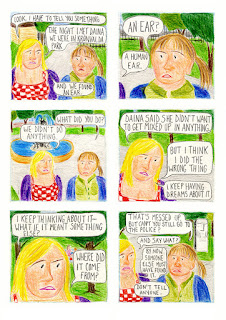
The ear doesn't really matter in the end. It is their inability to express themselves that dooms their relationship. Monta wants to tell Daina her feelings. Daina wants to share her secret. Whatever has been left unsaid will remain so.
Laura Ķeniņš art is phenomenal. Everything is done with colored pencils. I had recently read Everywhere Antennas by Julie Delporte, who also uses colored pencils and the contrast between the two artists` styles is quite interesting. Where Delporte used color sparingly, leaving plenty of empty spaces, Keninš fills each pages with vibrant colors. In Keninš book, there is a loose panel structure and each panel is filled with colors. The various colors used throughout are applied with varying levels of opacity to allow her to create lighting and shadow effects everywhere.
Her style also complements the story nicely. The pencils aren't used to add color to a black pencil drawing, but rather they are the basis of the drawing itself. This reduced the clarity of the forms and structures in some instances, but it contributes to the story in that it casts a haze over everything, reducing clarity and adding a small yet efficient layer of uncertainty over everything. Truly well done.
I was not familiar with Keninš' work before and it is a mistake I will correct shortly. Her meaningful examination of communication was stellar and I am looking forward to more thoughtful pieces from her.
In Laura Ķeniņš What She Wants to Tell Me, the protagonists are caught in a situation where that uncertainty can never be properly dispersed. The book opens with our protagonists, finding a severed human ear on the ground of the park. Daina, one of our protagonists, stands over it silently until Monta, our second protagonist, arrives and enquires about the situation. Monta wants to go to the police, but Daina advice against it. Despite this initial disagreement, they are clearly shaken by the discovery and decide to go for to go for drinks to talk and forget about this nasty business. They eventually kiss and Monta falls in love with Daina.
Hovever, despite this attraction and their eventual relationship, they can never talk freely to each other. Monta is uncertain of her own feelings and whether or not she can love another woman, but decides to commit to the relationship anyway. This uncertainty pervades their every interaction. She doesn't know how to express her feelings properly, so she keeps quiet. She expresses her doubt, but never to her partner, the one person who should be able to listen. Daina, however, seems to have a problem with expressing herself altogether. Although she seems more confident in her sexuality, she also appears to have secrets. Whatever they may be, be it related to how the ear got on the ground or not, she never says.

The ear doesn't really matter in the end. It is their inability to express themselves that dooms their relationship. Monta wants to tell Daina her feelings. Daina wants to share her secret. Whatever has been left unsaid will remain so.
Laura Ķeniņš art is phenomenal. Everything is done with colored pencils. I had recently read Everywhere Antennas by Julie Delporte, who also uses colored pencils and the contrast between the two artists` styles is quite interesting. Where Delporte used color sparingly, leaving plenty of empty spaces, Keninš fills each pages with vibrant colors. In Keninš book, there is a loose panel structure and each panel is filled with colors. The various colors used throughout are applied with varying levels of opacity to allow her to create lighting and shadow effects everywhere.
Her style also complements the story nicely. The pencils aren't used to add color to a black pencil drawing, but rather they are the basis of the drawing itself. This reduced the clarity of the forms and structures in some instances, but it contributes to the story in that it casts a haze over everything, reducing clarity and adding a small yet efficient layer of uncertainty over everything. Truly well done.
I was not familiar with Keninš' work before and it is a mistake I will correct shortly. Her meaningful examination of communication was stellar and I am looking forward to more thoughtful pieces from her.
Monday, 3 August 2015
Believed Behavior No.2: Never-Ending Self Actualization

How does one improve oneself? As human beings, we always question our own actions and behaviours. We want to be the better version of ourselves. Abraham Maslow described this as "self-actualization"; the desire of humans to become actualized to their full potential, to become all that you can be. In this issue of Believed Behavior, we meet characters who take (or took) active steps to reaching their full potential. Whether it's becoming a poet, realizing that you've made a wrong career choice, becoming an airplane or learning to recognize colours by touching them, these characters are on a quest of self-actualization.
I've talked about Believed Behavior previously and some of what I said still applies. Believed Behavior is a multimedia comics experience. Two issues are out and a third issue is coming out in June 2015. It's a collection of short form comics printed on newsprint as well as an online web platform that allows you to read the comics the way you want. Once you buy Believed Behavior, you get a copy of the physical object and have access to the full issue online. You can grasp at the ephemeral aspect of the comics in two ways that are completely disposable: newsprint and data.

While the first issue lacked focus in terms of subject matter, the second issue`s focus is much narrower. As I said earlier, we meet characters who are on a quest for self-actualization. This issue features comics from Anya Davidson, Lale Westvind, Lyra Hill, Sophia Foster-Dimino and Michael Deforge. We start with Michael Deforge's story in which a woman has her body surgically altered to become an airplane. She always wanted to fly and blew her trust fund on the surgery. As the story progresses, she finds it's not as fun as she thought it would be: "This is less chill than I imagined". The comic leaves no answer as to her future except these bittersweet moments of loneliness and reconsideration. Then Anya Davidson shows us this weird world of masculine factory workers, where one employee wishes to be a poet. He keeps this close to his heart as he's afraid of what the others will think of it. In the end, it seems that his aspiration to become a poet has no impact on anyone`s lives. Sophia Foster-Dimino's comic is about a young bodyguard hired to escort a monk across the land, during which she quickly realizes that she's not up to the task.
Perhaps the most impressive comic in the package is the one from Lyra Hill in which a blind boy in a neon shop learns to recognize colours with the help of his father. It is quite moving and very well executed, particularly when you consider the really short nature of the comic. Additionally, Lyra Hill also did an artistic performance of the story of Papa Neon, which can be seen on Vimeo. It's quite impressive and ties into the ephemeral themes as well. This performance, much like data, is immaterial. It has happened and will never happen again. We can see it, but we'll never experience it.

The medium of the comics allows you to reflect on the nature of the content. It makes you reflect on the longevity of those moments of self-actualization. Believed Behavior is printed on newsprint. This type of paper is thin, cheap and easily destructible. It's very nature is forgettable and bound to disappear over time, so to are our moments of clarity when we achieve our fullest potential. We evolve, as do our needs and psyche, and we can only achieve our highest potential for so long until we change and need to reach for new goals and a new self-actualization. Can these moments be everlasting? According to both the content and medium of Believed Behavior the question has a clear answer.

Perhaps the most impressive comic in the package is the one from Lyra Hill in which a blind boy in a neon shop learns to recognize colours with the help of his father. It is quite moving and very well executed, particularly when you consider the really short nature of the comic. Additionally, Lyra Hill also did an artistic performance of the story of Papa Neon, which can be seen on Vimeo. It's quite impressive and ties into the ephemeral themes as well. This performance, much like data, is immaterial. It has happened and will never happen again. We can see it, but we'll never experience it.

The medium of the comics allows you to reflect on the nature of the content. It makes you reflect on the longevity of those moments of self-actualization. Believed Behavior is printed on newsprint. This type of paper is thin, cheap and easily destructible. It's very nature is forgettable and bound to disappear over time, so to are our moments of clarity when we achieve our fullest potential. We evolve, as do our needs and psyche, and we can only achieve our highest potential for so long until we change and need to reach for new goals and a new self-actualization. Can these moments be everlasting? According to both the content and medium of Believed Behavior the question has a clear answer.

Monday, 22 June 2015
Dogs & Ad Astra Comix: An Interview with Nicole Marie Burton

Ad Astra Comix is a publisher, web
platform and distributor of political, historical and activist comics located
in Toronto. Their primary focus is on education, promotion and production. In
particular, their focus on education was something that I found really struck a
chord with me. French is my first language and I learned English by reading
comic books at age 5. To this day, I highly recommend comic books as a great way
to learn a new language.
Nicole Marie Burton of Ad Astra Comix gracefully agreed to talk with me about Ad Astra Comix and their current tilt campaign to get posters of Dogs, a webcomic about the findings of a Qikiqtani Truth Comission, printed and sent to schools across Canada. Dogs is a story based on the findings of the Qikiqtani Truth Commission, which reported that the Royal Canadian Mounted Police slaughtered hundreds of dogs in Inuit settlements. During our discussion, we talked about the campaign and other topics. I have edited a few things for flow.
--
Philippe Leblanc: For those
readers who may not be familiar with Ad Astra Comix, can you tell us what Ad
Astra Comix is about?
Nicole Marie Burton: Ad
Astra Comix was founded in 2013. The name comes from the phrase "Ad astra
per aspera", which means "To the stars through difficulties". This
is the state motto from of Kansas, where I grew up (Lawrence was my hometown in High School). I moved to Canada from the United States in 2003 and we`ve been using
this imprint in both countries. We're a Toronto-based company that retails,
publishes, produces, creates and promotes social justice comic books or comic
books with progressive political themes. Our mandate essentially works in two
ways. The first is that we work with comics to amplify the voices of
marginalized audiences: the voice of women, people of color, indigenous people,
folks from the LGBTQ community and creators from outside of North America and
Europe. The second is that we work to promote comics that challenge oppressive
framework. What do I mean by this? Racism is an oppressive framework; sexism is
an oppressive framework. Even colonialism is an oppressive framework. We want
to use and promote comics that challenge those ideas and expand with new ideas.
That is essentially our mandate.
Our vision for the future
of the business in the next few years is to be producing and retailing a line
of comics and also engaging in community events and workshops that work towards
personal empowerment, community involvement and social change.
PL: So far have you received
a good response with regards to achieving those goals you've set out to
accomplish?
NMB: Yes, reception has
been amazing. It's always a gamble when you start a business, but it's been
amazing so far. It's a challenge when you are essentially branding yourself as
trying to redraw the lines in the comics industry within a particular genre.
"Political Comics" is not really a thing per se. You can't go to your
local comic book store and go to the "political comics" section; it
doesn't really exist. When we set out to really build Ad Astra Comix and
develop a brand, we've asked ourselves a lot of questions as to where to take
it. This isn't like opening up a comic book shop, although it is challenging
enough to run a comic store. We were focusing more on the fundamental concepts
of what we were trying to promote: What is a political comic? What does this
theoretical genre entail? What defines it? Who is the target audience we want
to reach? Where do we fit in the comic book industry? We cast a wide net when
we started: we were retailing; we were giving workshops, presentations; we were
throwing parties; we were doing movie showings; we were tabling at events; we
published a comic in 2014; we were consulting with comics creators about their
comics; and we were writing articles for our website. Basically, we were all
over the place.
In the last year, we've had
a lot of people come to us saying that they'd want to help us develop the
business, but we need to know more about what we really want to do. We're doing
all of these general things, but what do we want to do in the future, what is our
focus? No one can do everything. We decided that the real place that our specialization
means the most is in curating and original production. Curation as readers are
looking for knowledgeable folks to help with the compilation of resources,
reading lists of comics that revolve around certain subjects. For instance, you
can go to a comic book shop to ask for the latest Brian K. Vaughan, or the
Image Comics section. In our case, people come to us and say: "What comics
do you have on the Israelo-Palestine conflict" or "what comics do you
have about immigration, or race or gender." We come up with resources
around that.
The other area we felt we
could be most useful is in the original production. There are political comics
that come out from mainstream publishers or from independent publishers, but
those publishers, wherever they fall, don't necessarily have a mandate that is
political or social justice oriented. What we're finding is that there's a
growing number of comic creators and readers who are looking for content that
is created with this kind of directive. Comics that are conscious about
questions of diversity, colonial mindset and decolonization. From what we've
gathered, comic creators with those ideas of social justice comics are looking
forward to having a publisher in the North American market that is focusing on
this type of comic with a narrower focus towards social justice production.
That is probably the role that we are going to move to fill in the next 12 to
16 months. We have four to five publishing projects underway that we'll launch
in the next 6 months. We'll be moving into high gear in launching our first
line of comics by the end of 2015.
 |
| Nicole Marie Burton & Hugh Goldring |
PL: You mentioned you feel
it's difficult finding political comics as it isn't really a category. The
definition certainly has evolved over time. I visited the Billy Ireland Cartoon
Museum and Library recently and
something that was clear was the fact that cartoons and comics are closely
linked with the political going all the way back to the early 1800's. It has
changed over time. Moving back towards this conception of a "political
comic" is interesting.
NMB: What is considered
sacred in society is a moving goal post and comics, or cartoons more
accurately, roots are deeply founded in political satire and criticism of the
elite. There is a theory that the word cartoon comes from the Italian word
"cartone" back in the 15th or
16th century Italy which meant cartons. What became common was for people to
create this sort of caricature of their landlord or noble that were made in the
back of food cartons; at the time it was this sort of heavy duty paper as it
was a cheap way to store edible goods. The great thing about cartoons was that
you didn't need to be literate to understand the jokes. If you drew your
landlord with exagerated features, his eyes or his nose, or even drawing your
boss in a sexually compromised position, was something that could bring
together your community for a good laugh.
What was so magical about
cartoons when they started was how powerful they could be without any words. I
read this quote attributed to Napoleon Bonaparte in which he said that what were
instrumental to his downfall, even more so than any European army, were
cartoons. Marie Antoinette was considered the first victim of tabloid
journalism and was notoriously drawn in sexually compromising positions and was
constantly ridiculed in political cartoons. At the time, these were untouchable
elites in the eyes of commoners; they were considered invincible, but the
cartoons brought them back to a human level. This was the power of cartoons.
Over time, cartoons became more intertwined with journalism and yellow
journalism even more so. Competing newspaper companies had an interest in
producing cartoons that depicted their views on whatever topic was in the news
at the time.
I find it to be hilarious
that there are still cartoonists out there who behave as though nothing has
changed in society and you can get away with anything. When we say we publish
political cartoons, people immediately bring up the touchy Muhammad cartoons
debate. People ask us "hey, you guys are doing political cartoons, let's
talk about the Muhammad cartoons. Where are your images of Muhammad, or your
mocking the Iranian mullahs". Our mandate and what we
want to accomplish requires us to be filtered and thoughtful in what we curate. We believe in social justice comics, and this is where the future of political comics is heading towards.There is nothing untouchable about the prophet in today's world. Muslims as a
whole have been the victim of American military violence constantly for over 30
years, both physically and through media-led attacks. The free speech aspect of
comics and the idea that they must prevail above all else is ludicrous. There is
nothing revolutionary about drawing the prophet. The real future of
"political comics" is to move beyond this towards helping us better
understand our world and articulating what we want to change in the structures
surrounding us. We don't even know how to dismantle patriarchy or how to
dismantle colonialism, let alone all the ways it affects our daily life. Today, any political leader can fall - most will be replaced, but the cycles of systemic oppression continue. They are the new Goliaths of our time - not any individuals. We believe comics are a great way to take them on.
PL: Using cartoons as a
beacon towards understanding the other and articulating the way forward.
NMB: Exactly.
PL: Another of your goals
is the aspect of Education. I was wondering how you've approached comics as an
education tool so far. As a personal experience, I can tell that I'm a
French-Canadian and French is my first language and I've learned English by
reading comic books. I remembered as a kid reading comics and eventually
understanding the language in them. I've always known intuitively that comics
can serve as teaching tools, but I'm curious as to how you approach using
comics for other educational elements.
NMB: I think we've only
begun scratching the surface of what we can do with education with comics.
We've done a few workshops on how comics can convey complex information in a
short period of time. We've also done a workshop on how to use comics in the
classroom. The main areas we work around are history, language and science.
Comics are great for learning a second or third language. We think comics are
interesting as you can look at something visual and absorb information. Words are visual symbols, like images, but their meaning can only be interpreted by deciphering, A picture
can be absorbed much faster than a paragraph, it's not linear so you can absorb
all of it at once. There is no intermediary in your brain recombining this
information; it is immediate. I could spend a paragraph writing the description
of a house and then drawing that house and a person would absorb the visual
faster than the written paragraph describing it. I really resent the argument
that comics are dumbed down forms of entertainment. It is a medium that can be
used in different ways. There is a growing body of literature in the education
world that shows that a lot of people are visual learners as opposed to oral or
verbal learners. A lot of people are naturally more inclined to learn with
visual association of information and comics are tying into that in terms of
harnessing that energy in a creative way.
PL: Portraying an idea
visually certainly helps to understand it better. A pie chart or a graph of any kind are tools to help you
process information. Putting more complex information in a comic book format allows
you to expand on it and convey information that you
might struggle with in a purely written format.

PL: Ad Astra Comix
currently have a tilt campaign to print posters of the comics Dogs.
This comic was originally published in March 2015 and created by Hugh Goldring and yourself with the goals of amplifying the findings of
the Qikiqtani Truth Commission. Can you
tell us more about that?
NMB: Hugh is from Ottawa
and he has family connections to Arctic history. Both of his parents are historians
and one of them spent a major part of their career studying Arctic history with
a focus on 20th century history. Hugh had done research in the past about
the Qikiqtani Truth Commission (QTC)
before the report was even completed. He learned about what is often referred
to as the "Inuit Sled dog slaughter" or the "Inuit Dog
slaughter". This was a period of time in the Eastern Arctic during the
1950's and 1960's when the RCMP, relatively new to the region at the time,
instituted something called "The Dog ordenance". On the surface, this
ordenance looked like an effort to ensure law and order in the settlement and
instituted in the interest of public safety. However, it called for Inuit dogs,
or any dogs, to be shot on sight if they were not tied in the settlement.
Additionally, if a dog was not identified, or if the owner was not present or
unknown, the dog would be shot. What became of this is something that many
inuit communities associate with the push from the Canadian government to
confine Inuits, largely migratory communities to settle. Dogs weren't pets,
they were a part of the community, part of the families, they were used for
transport, they were part of the culture. For a lot of the inuits who experienced
the loss of their dogs, this was a very traumatic time period. Hundreds, if not
thousands, of dogs were shot by the RCMP during this time. The Inuit were not
blind and noticed that the dogs belonging to the RCMP or the Hudson's Bay
Company would not get shot regardless of the situation. This became a clear
sign that the government was forcing the Inuit to settle and essentially adopt
customs, practices and products from the South. It was traumatic and seen as
unresolved in their ancestry and community history and the QTC was struck to
develop a record, primarily of oral history, from those that it affected. The
RCMP, in true RCMP fashion, did an investigation of themselves and found that
although slaughter had taken place, they refused to admit it was due to a
larger plan to force settlement and never apologized for it. Many Inuit,
including Peter Irnik, has said that, if
they apologized we can forgive, but there needs to be an apology. The
question then becomes will there ever be any accountability and any apology in
this context?
The creation of the comic
was about directly amplifying the findings of the commission. We did the best
we could as settlers, white people, to not speak for the Inuit,
they're perfectly capable of speaking for themselves, but it really showed us
that this isn't an untold history, but rather that it was just not being
listened to. We wanted to amplify this history and distribute in Canada where
it is needed the most; in centers of learning, classrooms, libraries, community
centers, and into people’s homes if they wish it. We want to get the word out.
We're horrified to hear that our police would do such a thing as shooting dogs.
It may be more common in the United States, but it's a really heartbreaking and
atrocious thing to happen. And the mass scale of this was truly terrible as
this happened in such a short period of time and nobody knows about it.
PL: The timing for this
comic seems quite timely as the report came
out less than two weeks ago (on June 3rd 2015) and there is a willingness to be
more invested in these stories.
NMB: I can only hope so.
With you being in Ottawa, I can assume it has generated more discussion. I
haven't had a lot of in-person discussion about it in Toronto, though my social
media feed has been quite active on this report. We want to use the comic as a
conversation starter. All of us Canadians have a stake in this history, we are
all responsible for this history. I may not be the RCMP, but as a settler, I
understand what they represent and have a vote of confidence regarding their
structure and for me to be outraged enough that I feel I must express it means
that a serious discussion must happen and I hope many Canadians feel the same
way.
The Truth and
Reconciliation reports shows us that it's time to be investigating, to get
informed about indigenous voices and history. It's important for the country to
have a conversation about this and really give ourselves the space to consider
how profound and far reaching the implications this history has had on everyone
in this country. We're talking a lot about a history of cultural genocide, but
the Qikiqtani Truth commission shows
that there is also, to a lesser extent, a physical genocide. I think we can't
ignore this.
PL: It's interesting since
it's not a definitive report either. It's meant as a way to move forward
towards a better understanding of Inuit culture. This comic, amongst other
cultural productions, can be a step in the right direction.
NMB: We hope that is the
case. We've had conversations with people in and around the Qikiqtani Truth Commission. We're
in conversation with the QTC to put the comic up on their website so people can
access it as a resource. It's currently being translated into French so as to
reach a broader Canadian audience. Part of this history happened in Northern
Quebec.
PL: When you approached
this comic, how did you manage distilling the amount of information you had
into what is essentially a fairly short comic?
NMB: Hugh is trained in
writing, research and history, so he has this uncanny ability at summarizing
information. He's good at taking in a lot of information and boiling it down to
it's essential parts. A big part of that process goes to him and his talent.
In terms of how we wanted
to lay it out, we felt as though what was needed was a general contextual description
of the situation at the time, what led to an increased presence of the Canadian
State in the North, part of that was the Cold and Northern Sovereignty, but
also the prospect of natural resources which is to this day a big part of the
industry in the North. We thought it was important to show the perspective of
the Inuit both before and after the event took place. Upon distilling the
information of the report, we felt it was important to note that the Inuit noticed
that their dogs were being murdered, but not the dogs from the Hudson's Bay
company. It was important to us to draw out the panels where we see the
violence against the animal in a very somber way. Particularly the panel where
we see a man's back facing away from the reader, there is no text and it feels
quite empty, but the second panel is him dropping to his knees, harness in hand
and just a few drops of blood.
We tried to use colors
sparingly while trying to capture the color of the Canadian North. It's not all
white and snow with cloudy skies. We chose to use a palette of pink and yellow
in addition to those colors while keeping it really somber to allow for those
instances of red and blood to have a bigger impact in people's mind.
I feel as though there's a
literary piece, a political piece and an aesthetic piece to this comic that we
tried our best to join as seamlessly as possible. This comic is, in a lot of
ways, a test as a production team to take some of our theories on how to make
political comics a more vibrant genre and put it to the test. So far, the
feedback we've received seems to indicate we're right to an extent, or that
we're at least going in the right direction.
PL: The comic itself is
quite interesting. Your tilt campaign you have at the moment is to print
posters of the comic that would be distributed in Canadian schools. You've also
included the disclaimer you wrote and posted after the comics online. Why did
you feel it was important to do that?
NMB: We felt that we didn't
feel personally comfortable publishing this comic without a disclaimer. We felt
that way too often indigenous stories and histories are told by settlers. For
us, and particularly for an artistic rendition of a history that was so
sensitive and so painful for many, we really felt the need to publish the
disclaimer at the same time. We wanted to ensure people knew that we recognized
that we're settlers, we produced this comic to amplify what has already been
said and that we undertook the project without the full accord of the QTC. We
had spoken and consulted to many around the commissions and they agreed it was
a good idea, but it wasn't a full cooperative process. We wanted to outline
what our process was like to be as transparent as possible and show people what
we're all about. Far too often, settlers or non-indigenous people take on these
projects without consulting or engaging the communities they're talking about and
aren't engaging in open dialog. We wanted to avoid that error. The posters will
include the disclaimer, and we’re also encouraging people to visit the Qikiqtani Truth Commission website. It
should serve as an introduction and those who want to learn have a wealth of
resources they can access.
PL: This ties into the next
question I had for you. In your disclaimer, you and Hugh Goldring “both had
mixed feelings about telling such a sensitive story – both because we are
white, and because it is difficult to depict it in all its painful complexity.” You’ve
also said: “Handling indigenous subject
matter is always a challenge for settlers, and to be clear, we are white
settlers. We have done our best to avoid speaking on behalf of the Inuit who
are more than capable of making themselves heard when qallunaat take the
time to listen. But it is a narrow beam to balance on.” I’ve seen a similar
statement from Martin
Laroche, a French-Canadian movie director who recently directed “Les manéges
humains” (Fair Sex). It’s a faux documentary about a
young African-Canadian woman filming a documentary about the travelling
amusement park where she works, but slowly, the documentary becomes her way to
deal with her own life and coming to terms with the pain and stigma caused by
the genital mutilation she suffered as a child. Laroche
mentions the inability of being able to fully grasp the realities of the
subject of his film, but also of the importance of understanding the topic,
through research and dialog and empathy.
The story of Dogs is
important and, without necessarily wanting to speak for the Inuit community,
you also want to raise awareness and speak “about” the issue. In this case, the
disclaimer is your way to navigate this murky territory?
NMB: Absolutely. Hugh and I
feel that it's going to become more and more an issue as we see these people in
positions of privilege start to feel a sense of obligation about the systemic
challenges and injustice that face the people around them. Whether its man to
woman, white people to people of color, settlers to indigenous people, we're
going to see more and more people in positions of privilege want to take on
those stories. They see it as their way to resolve their sense of
responsibilities towards these issues. It's good in some ways, but it can also
be problematic in other ways. I think our disclaimer is good as it reflects our
concerns toward the issue, but it's difficult to balance this. You don't want
to imply that you're taking the lead on someone else's struggle. You don't want
to speak for someone or over someone and this can get tricky for someone who is
blinded by their privilege.
I feel like the answer to
respond to this is consultation. I find it hard to imagine a scenario with too
much consultation. I think that a major component to dismantle oppressive
framework is the establishment of trust. When people of privileges take on
projects that concern the welfare of oppressed people without consulting those
affected by it, one has to wonder about the motive and the agenda. If it is in
the interest of furthering the advancement of that group or people, why not
connect with them and consult about what you're trying to do? If it is not in
the interest of furthering the advancement of that group, then what is your
project all about? Self promotion? It certainly comes across as doing something
for cookies when you don't consult.
PL: Doing something with
the intent of receiving praise for it rather than actually being engaged in the
project.
NMB: Exactly, like someone
defending a woman or saying something feminist in a meeting, or saying
something anti-racist in front of people of color and expecting immediate
rewards and gratification for your surface level show of solidarity.
I think what a lot of
people are looking for in terms of solidarity and dismantling those
oppressive frameworks is an understanding that the systems we're up against is
much bigger than a comic, or a report, or a movie. These are long term goals
and they are going to take years to achieve. It will take us years to unlearn
those systems and for trust to be reestablished. I think that's one of the
lessons of the Truth and Reconciliation Commission.
PL: Understanding,
collaboration and consultation in the hope of moving the conversation forward, to help
heal the pain and become more aware of history and others.
NMB: And it's a long
process. It’snot a button you can press, it's not a t-shirt that you can wear.
It's not a catchphrase that you can use. This is a part of the lesson that we
are trying to instill. We have a quote at the end of the comic that says "History
is about more than self-congratulatory vignettes, it can help us be accountable".
I like this quote as it's a reminder to the reader that this isn't the end.
We’ve told this story and the reader can learn from it and understand that he
has his work cut out for him afterward. If you wonder how to be an ally or a
supporter of this or that movement, you can start by promoting those
marginalized voices in history, and in the present day and in the communities
that we live in and in the virtual space we occupy as well.

PL: What would you hope to be
the best outcome you reach with this comic?
NMB: Well, I want to be
cautiously optimistic about the future. We've had lots of conversations with
people about this comic, both online and in person. One I vividly recall was a discussion
with this young guy from Edmonton who mentioned liking the comic and asking if
we wanted to produce a comic with people from Northern Alberta about their
history. I thought that this would be amazing, but I think preferably, I would
like to see this type of work sprout like mushrooms with or without me. At the
end of the day, it would be incredible to see this type of effort happen in
this medium that I feel so passionate about.
People are looking for more
creative ways to look at information, but also looking to be more creative in
how to present information and comics is perfect for that. I feel that we're on
the verge of a political comic renaissance and being able to contribute and
hopefully show examples to steer them in the right direction is the best
outcome I could possibly imagine.
In 2013, publishers weekly
announced that the comic and graphic novel section were the most popular section
in American libraries with books being taken out with an overwhelming frequency
and volume compared to other sections of the libraries. Comics are into schools
and community centers; they're being developed for educational programs, for
health care plans, for youth and mental health programs. And it's all happening
at a time where there are huge discussions around feminism, around indigenous
rights, around fundamental changes in direction within our society. It's such a
perfect storm and I hope comics will be used more often to inform this. That
would be the best outcome. I hope Dogs opens that window just
a little bit more.
--
- To contribute to the Tilt campaign to bring Dogs to Canadian schools
- For more details on the other projects
of Ad
Astra Comix, visit their website
- Please visit the Qikiqtani Truth Commission for
more information on the process and report
- Please visit the Truth and Reconciliation Commission to learn more information about the
commission and the report
Subscribe to:
Posts (Atom)